Connected Grinding Technology: Trends and Technological Developments at GrindingHub 2026
Approximately 11,000 visitors from around the world learned about the latest developments and technological innovations in grinding technology from a total of 462 exhibitors from 28 countries and used the trade show as an opportunity for in-depth professional exchange. The high level of international participation – with more than 50 per cent of attendees coming from abroad – made it clear that the topics addressed are not limited to the German-speaking market but are shaping the grinding industry worldwide. GrindingHub thus reaffirmed its role as the leading international platform for grinding technology, precision surface finishing, tool grinding, measurement technology, automation, and digital process solutions across the entire grinding technology process chain. At the same time, the trade show reflected the fact that the industry is currently under pressure: declining production, weaker exports, rising energy and material costs, and volatile sales markets are shaping the business environment. That is precisely why GrindingHub 2026 focused less on isolated individual machines and more on more productive, robust process chains that utilize sensor technology, measurement data, and digital feedback for process monitoring and quality assurance.
Compared to GrindingHub 2024, a noticeable shift can be observed. While the previous event had already addressed automation, digitalization, sustainability, coolant delivery, and new grinding tool concepts as key topics, the 2026 event placed even greater emphasis on the systemic nature of the grinding process. Grinding is no longer viewed primarily as a single operation, but rather as an integrated process comprising the machine, tool, sensors, measurement technology, data management, automation, and maintenance. This trend was very evident at the trade show: Many new products were not designed merely to improve individual process parameters, but to simultaneously address process stability, operator convenience, traceability, energy efficiency, and quality assurance. The evolution from individual machines to cross-process manufacturing systems was particularly evident in integrated measurement and compensation solutions, data-driven spindle and machine condition models, automated dressing and tool manufacturing cells, and new tool designs for higher material removal rates while maintaining controlled thermal stress.
Overall Technological Development: Grinding as a Networked Manufacturing System
GrindingHub 2026 demonstrated that technological advances in grinding technology can no longer be described solely in terms of higher spindle power, more rigid machine structures, or finer grinding tools. The key trend lies in the functional integration of these individual components. Increasingly, the focus is shifting much more strongly to the question of how process data, tool conditions, machine behavior, and measurement results can be fed back into the system. In this way, grinding processes can be carried out in a more stable, efficient, and reproducible manner and viewed as integrated systems. As a result, the focus of innovation is shifting from pure process design to greater process control. The trade show highlighted that grinding technology is moving toward more robust, digitally supported, and, in some cases, adaptive process chains. Using the Wotan Dynamic Rest as an example, Wema Glauchau demonstrated how a dynamic steady rest can actively compensate for positional deviations in long, flexible workpieces during machining. GMN also demonstrated with Idea-4X that spindle condition data is increasingly being utilized for monitoring, maintenance, and process evaluation. The goal is no longer simply to grind more precisely or more quickly, but to monitor the development of quality throughout the process, document it, and, if necessary, influence it in a targeted manner.
Artificial intelligence is increasingly taking on the role of assistance and analysis technology in this context. Examples include data-driven machine and process diagnostics, automatic wear assessment, and systems that support operation, maintenance, and process planning. From a technical standpoint, it is crucial to understand that AI is not a substitute for an understanding of grinding technology processes, but rather a tool for consolidating and interpreting large amounts of data from machines, tools, sensors, and measurement technology. The benefits are most evident when systems convert this data into reliable process information and make it usable for operation, quality assurance, maintenance, or process optimization.
Flexible Machine Designs for New Workpiece and Process Requirements
The grinding machines presented here demonstrate a significant expansion of the areas of application they are designed for. In addition to highly productive series production solutions, flexible machine concepts are gaining importance, as they cater to a wide range of workpieces, smaller batch sizes, and easier operation. In this way, manufacturers are responding both to the shortage of skilled workers and to the increasing variety of product variants in many user industries. Machine concepts are no longer differentiated solely by the number of axes, size, or spindle power, but increasingly by their integration in process chains, automation solutions, and flexibility.
The Swiss grinding machine manufacturer Kellenberger, based in Goldach, is showcasing two machines – the K8 and the upgraded K10 – that clearly reflect this trend. The K8 is designed as a standardized, cost-effective CNC cylindrical grinding machine for entry-level applications as well as for small and medium-sized production runs. It deliberately omits certain configuration options, but provides a stable, high-precision foundation with a one-piece machine bed, friction-reducing coated V-flat guides on the Z-axis, and high-resolution Fagor measuring systems. Unlike the larger series, the K8 does not have a loader interface and is therefore positioned more as a robust, easily accessible standard machine. The K10, on the other hand, expands the cylindrical grinding portfolio to offer greater flexibility and enhanced process support. The universal grinding head accommodates two external grinding wheels and a directly driven high-frequency internal grinding spindle with a maximum grinding wheel speed of 60,000 rpm. In addition, there are longer X- and Z-axis travel ranges, an automatic B-axis, and an enhanced user interface. Features for structure-borne noise detection, semi-automatic balancing, quality measurement, and grinding time monitoring demonstrate that the machine is not only more versatile but is also designed to support guided operation, reduce setup time, and facilitate process monitoring.
At GrindingHub 2026, Emag from Salach highlighted not only its broad portfolio of grinding machines but, above all, the importance of coordinated process chains. Components are prepared during the preceding manufacturing steps so that only the amount of material that is actually necessary is removed during the grinding process. Grinding is therefore not viewed as an isolated corrective operation, but rather as a precision process used strategically within a production chain designed for economic and efficient operation. Particularly for high-precision functional components, this approach can help reduce machining times, tool wear, and process costs without compromising the required dimensional, geometric, and surface quality.
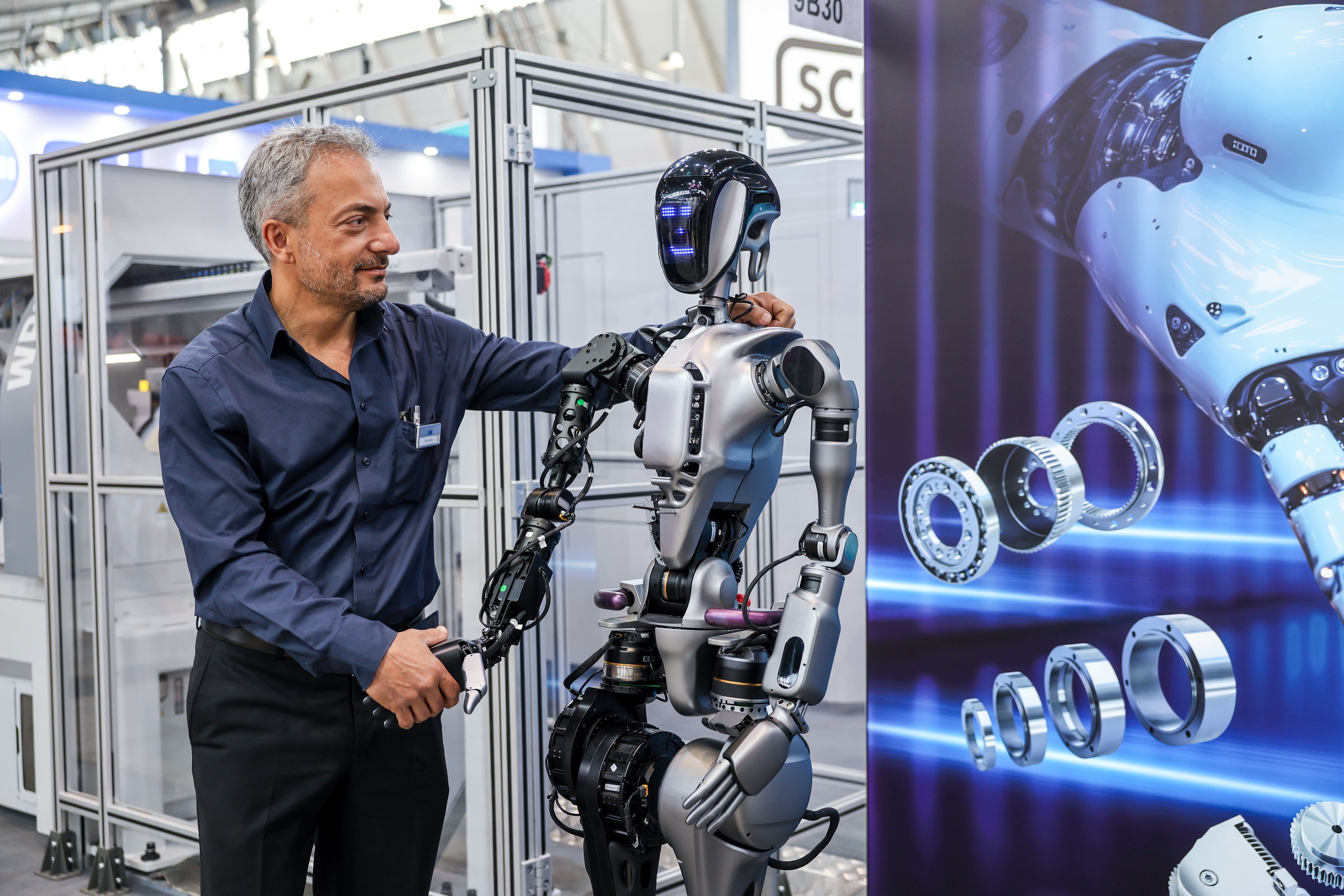
This process chain approach can also be applied to new fields of application. The production of components for humanoid robotics is a particularly prominent focus here. Such applications require high-precision gear, shaft, screw, and actuator components, where motion precision, noise levels, load-carrying capacity, and service life depend directly on the manufacturing quality. This creates new demands for flexible yet cost-effective machining solutions that effectively integrate the various process steps, from rough machining to finishing. Among the machine modules presented for this purpose, EMAG showcased the UG 400 for flexible internal, external, non-cylindrical, and surface grinding operations in a single setup; the G 500 HL for profile and gear grinding; and the WPG 7 for automated external cylindrical grinding processes. The key factor here is not just the specific machine concept, but the ability to handle a variety of machining tasks within a comprehensive manufacturing strategy.
Flexible Chucking Systems for Complex Components
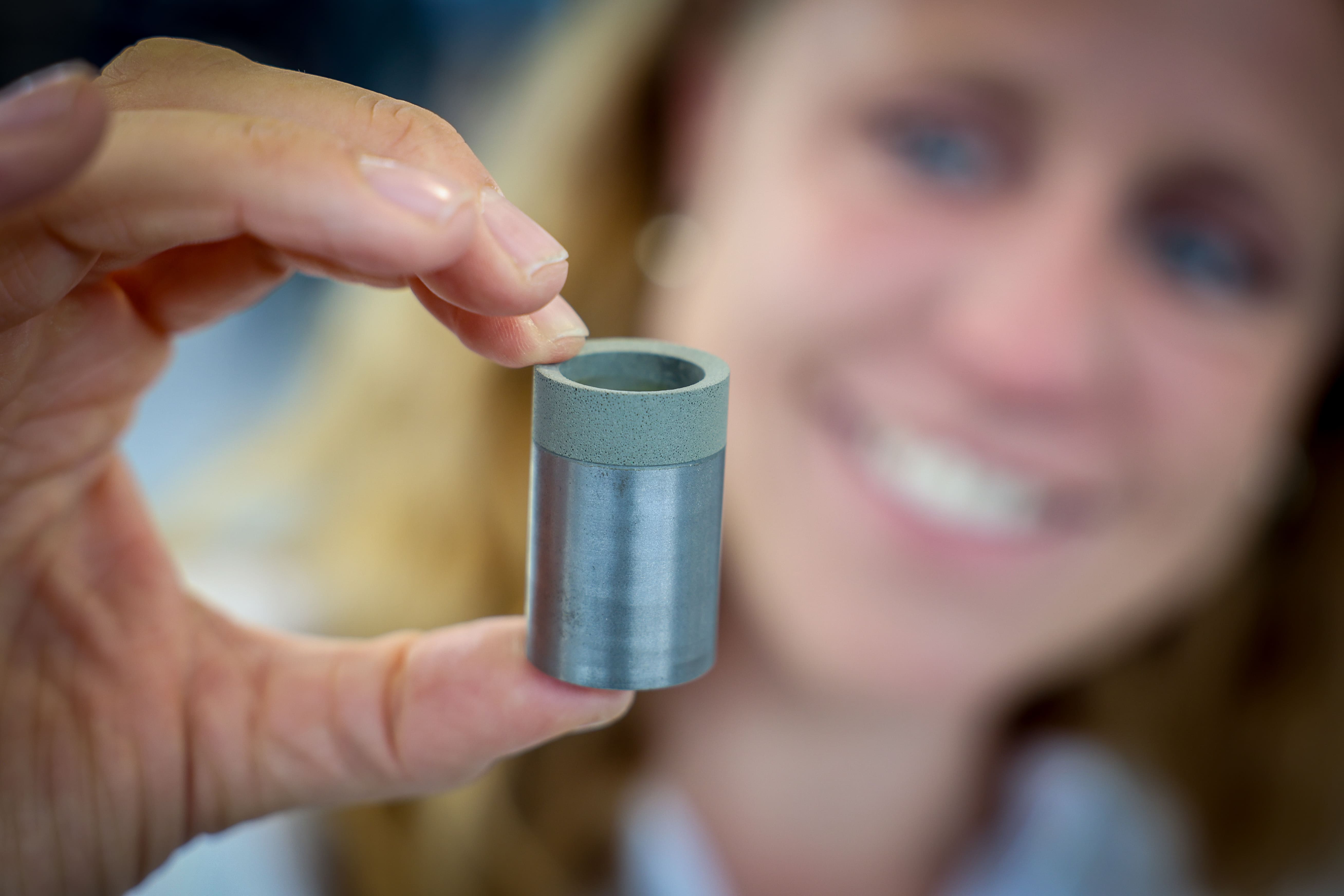
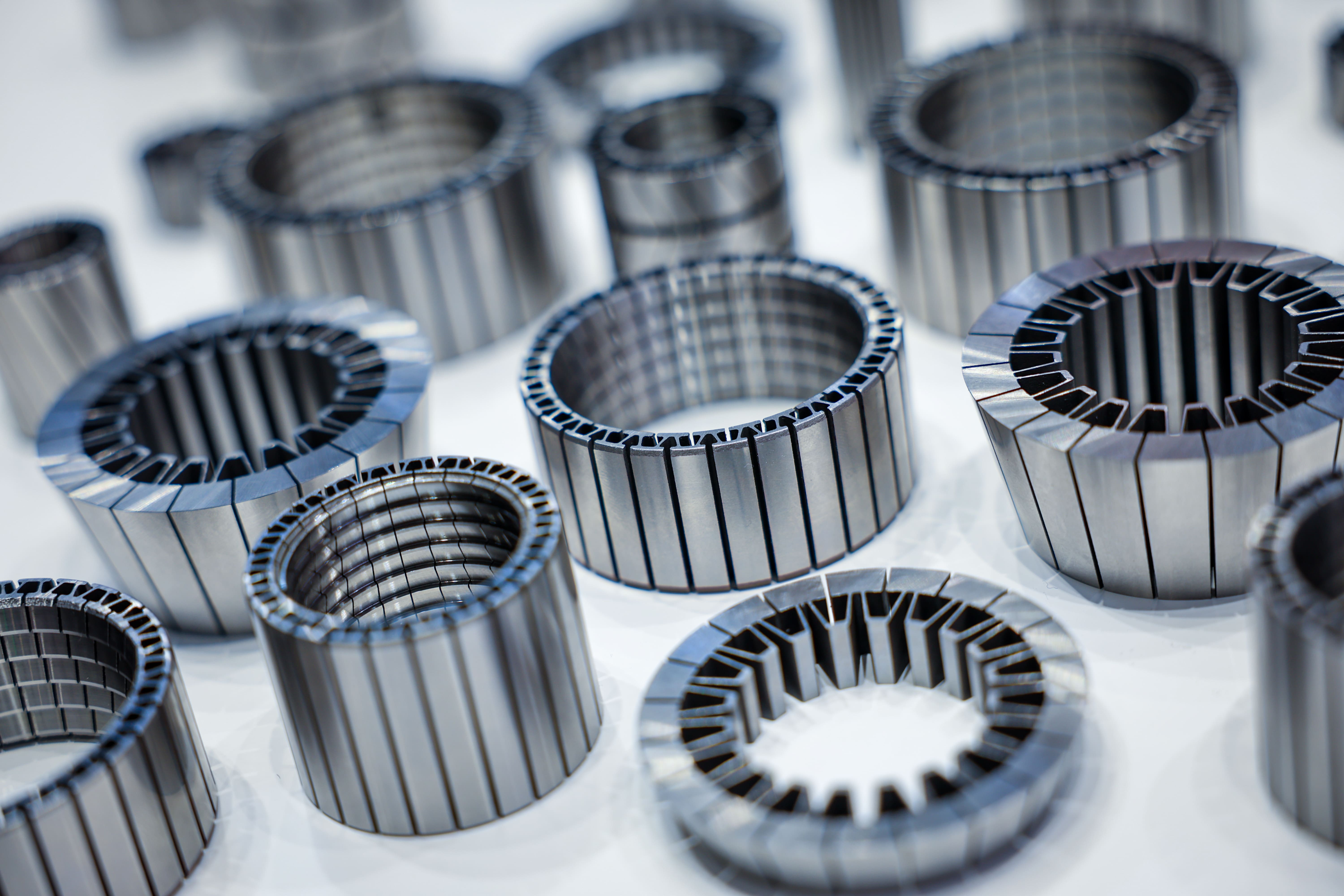
This approach is also reflected in the clamping technology. Flexible process chains require chucking systems that can securely hold components with varying geometries, hardening distortion, or thin walls with minimal deformation. Emuge, a German clamping technology manufacturer based in Lauf an der Pegnitz, showcased additively manufactured clamping sleeves designed for the flexible clamping of various components. Emuge manufactures these clamping sleeves using laser deposition welding and incorporates longitudinal, meandering clamping segments as well as honeycomb structures that would be difficult to produce using conventional manufacturing methods. These structures are designed using FEM to specifically adjust radial expansions for internal tension and radial contractions for external tension. This eliminates the need for separate rubber components, which are frequently used in traditional clamping systems. Grinding as a post-processing step plays a key role in the production of additively manufactured clamping sleeves, since it is only through the machining of the inner and outer surfaces that the surface topography required for precise clamping is achieved. This method is particularly suitable for hardened workpieces with hardening distortion, thin-walled components, and workpieces with varying geometries, where uniform force distribution and minimal clamping distortion are required.
Self-Monitoring Grinding Processes, AI, and Sensor Technology
Based on these flexible chucking systems and machine and process chain concepts, another trend emerged at GrindingHub 2026. Manufacturers are increasingly designing grinding machines and related machining systems for autonomous production processes. The term "autonomous manufacturing" should be used with caution in a technical context. This does not refer to a machine capable of making its own decisions, but rather to a manufacturing cell that, once set up, can operate stably over an extended period of time, under supervision, and with minimal manual intervention. As a result, the operator's role is shifting more toward process preparation, monitoring, and organization, and away from direct machine operation.
Rollomatic, a Swiss machine tool manufacturer based in Le Landeron, addressed this trend with an automated tool grinding solution that combines a grinding machine, robotic handling, and a workpiece storage system into a manufacturing cell that requires minimal operator intervention. The focus was not on individual automation components, but rather on the ability to produce different tools in a reproducible manner over an extended period of time following an initial setup. From a technological standpoint, this illustrates the transition from automated individual machines to autonomous tool manufacturing cells. This form of low-labor manufacturing is becoming increasingly important, particularly in tool grinding, where there is a wide variety of product variants, a high demand for skilled workers, and stringent quality requirements.
A similar approach is taken by Häberle of Laichingen – a German specialist in CNC technology and robotic automation – in its automated grinding wheel preparation process, developed in cooperation with Fanuc Germany of Neuhausen auf den Fildern, the German subsidiary of the Japanese automation specialist. This process combines spark-erosion dressing of conductive grinding wheel bonds with robotic handling, a setup station, and a digitally managed job sequence, thereby integrating it more fully into an automated manufacturing environment. Depending on the tool dimensions, this means that up to 100 tools can be prepared for use autonomously. This approach reduces downtime – especially when tools are changed frequently – and relieves the grinding machines of the need to perform dressing tasks beforehand.
Wema Glauchau demonstrated another example of process control with greater feedback using the Wotan Dynamic Rest. The grinding of long, projecting components often involves deflections that can vary depending on the workpiece geometry and the grinding process. Steady rests are used to provide additional support for the workpieces. The dynamic steady rest not only supports long, slender workpieces, but also enables active tracking to compensate for minimal positional deviations during machining. This marks a step toward a more controlled component guidance process, moving away from a setup and support process that has, until now, relied heavily on experience. Technically speaking, this is a closed-loop approach for dynamic position correction in external cylindrical grinding. This is particularly relevant for long, flexible components, because the workpiece position, deflection, and roundness errors directly determine the achievable dimensional accuracy.
The dynamic steady rest transmits the feedback directly to the workpiece's support and positioning mechanism. The same approach is also evident in the identification and evaluation of machine and spindle conditions. The focus here is less on the direct mechanical compensation of individual deviations and more on the structured collection, processing, and utilization of condition data as the basis for monitorable and, in the future, more autonomous manufacturing processes.
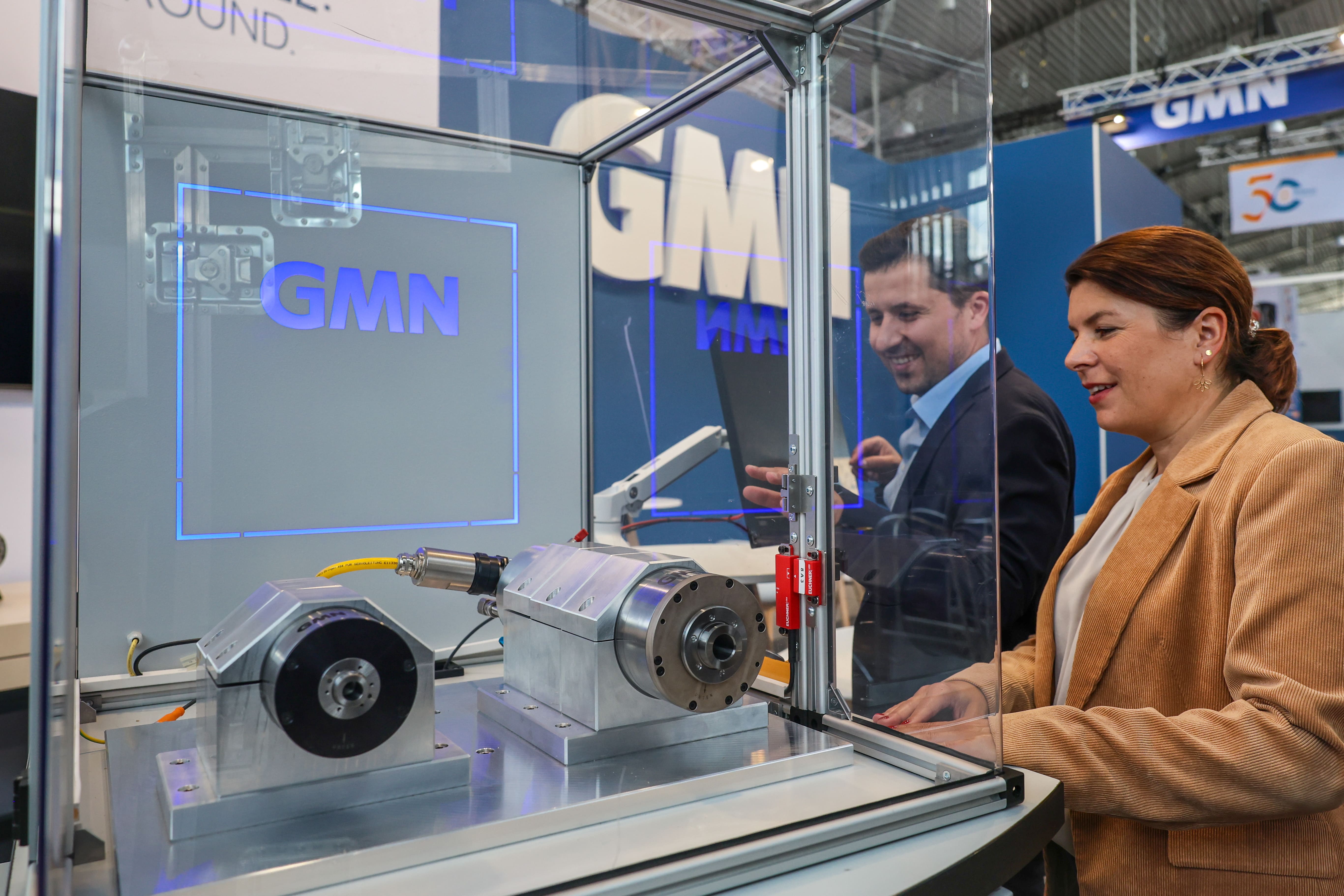
With Idea-4X, GMN of Nuremberg took the concept of the sensor-integrated spindle a step further toward a networked spindle and data ecosystem. While Idea-4S laid the foundation for collecting spindle and condition data via a standardized IO-Link connection, Idea-4X expands on this approach by offering more highly networked analysis, communication, and service capabilities. Condition variables such as vibration, rotational speed, temperature, shaft growth, and operating data are thus no longer viewed merely as individual values, but are aggregated into an interpretable representation of the machine's condition. The spindle is thus viewed more as a data-driven process module that supports monitoring, maintenance, digital documentation, and, in the future, process optimization as well. Digital twins and digital product passports provide the spindle or machine with a digital identity, which allows technical characteristics, operating data, and service information to be presented in a more structured way. Idea-4X thus exemplifies the trend toward viewing grinding spindles not merely as primary mechanical components, but as data-bearing and network-compatible process modules.
Neuron Soundware took a complementary approach. Founded in 2016, this Czech startup uses acoustic AI to assess machine and process conditions based on characteristic noise signatures. This approach is of interest for grinding machines because spindle bearing conditions, incipient damage, or process anomalies are often accompanied by changes in vibration and sound patterns. The advantage is that acoustic monitoring does not necessarily have to be installed directly in the working gap, but can be integrated into existing machine environments as an additional diagnostic layer. This expands condition monitoring to include a non-invasive method for the early detection of spindle and bearing abnormalities.
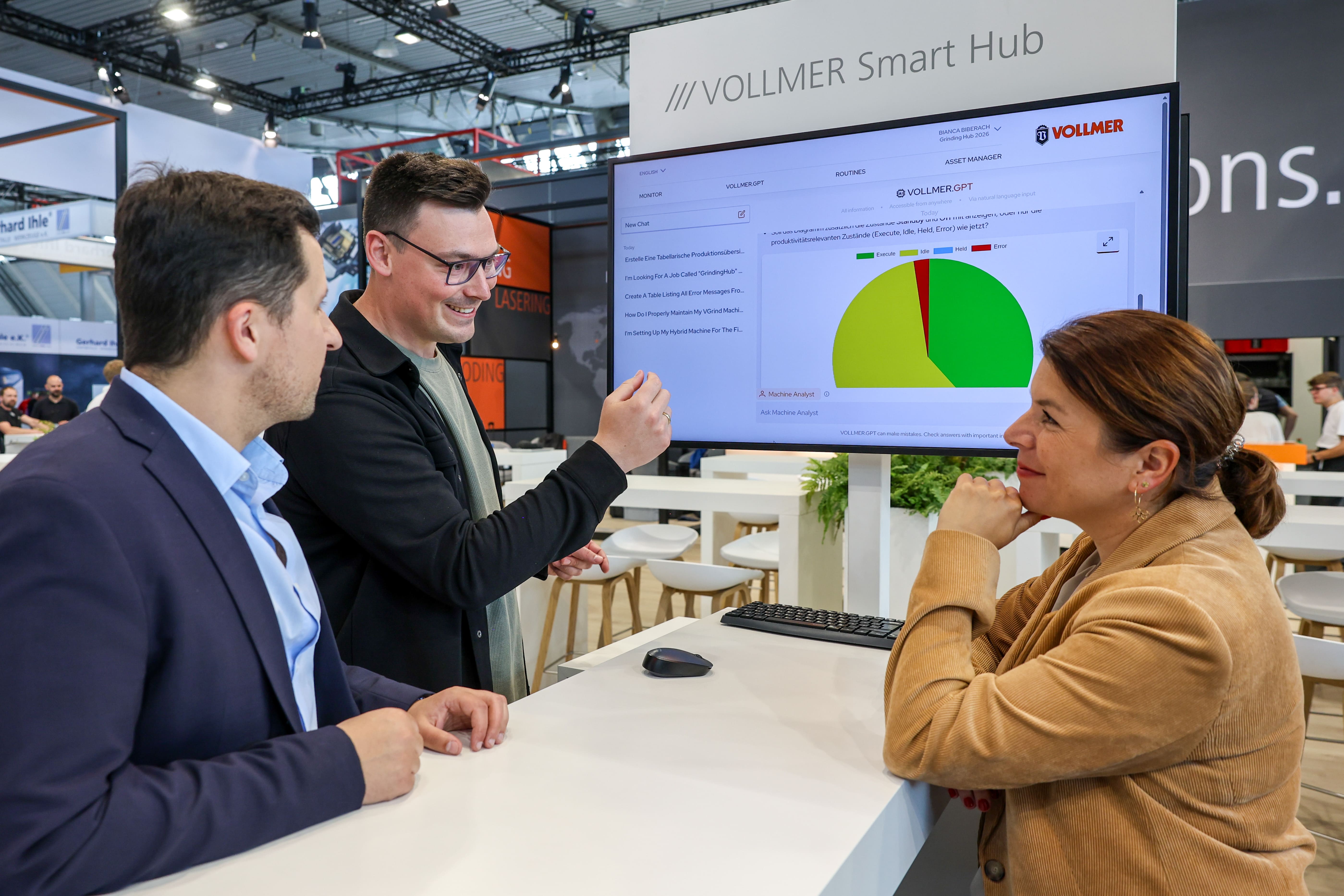
Vollmer, based in Biberach, embraced the concept of data-driven assistance with its SmartHub platform. The platform integrates machine, data, and process information and supplements it with an AI-powered chatbot for analyzing machine data. From a technical standpoint, what matters most here is not so much the idea of a machine that makes autonomous decisions, but rather the structured provision of existing information. The platform makes machine conditions, production data, and service data more easily accessible and supports operators, production planning, and service teams in diagnostics, process evaluation, and maintenance decisions. Thus, the digital assistance layer does not replace experiential knowledge, but rather makes it applicable in a structured way.
The increasing interconnection of machines and data also requires appropriate digital infrastructure. United Machining Solutions addressed this issue with digital solutions for machine operation, production monitoring, and service integration as an extension of its in-house C.O.R.E. platform. In this way, United Machining brings machine data, user interfaces, service functions, and analytics more closely together. It is particularly important to note that digital machine connectivity should not be viewed merely as a convenience or efficiency feature, but also raises issues of cyber resilience. Remote access requires controlled authorization, encrypted transmission, and traceable documentation. This demonstrates that self-monitoring and networked grinding processes require not only additional sensors and analysis software, but also a secure digital environment where machine, service, and production data can be reliably accessed and utilized.
From Tool Wear to Surface Lead Analysis: Measurement Technology Is Becoming a Key Basis for Decision-Making in Manufacturing
Machine condition monitoring is followed by a process-oriented assessment of tool and component quality. Zoller, based in Pleidelsheim, presented a wide range of measurement, inspection, and automation solutions for the grinding process. These include AI-based solutions for assessing wear on cutting tools. As a result, the assessment of tool condition is no longer based solely on the operator's subjective judgment, but can be evaluated using image-based, standardized methods. This makes it possible to document wear conditions in a more reproducible form and to make more informed decisions about the continued use of tools. In addition, Zoller demonstrated, using measurement systems such as titan, approaches to the automated measurement of microtools, the characterization of cutting edges, and the evaluation of the surface quality of the chip surfaces. Measurement technology is thus increasingly evolving from a downstream testing tool into an integral part of digitally supported quality control loops in tool manufacturing.
The startup Metubiq, which has ties to the University of Kassel, is taking a different approach to process-oriented measurement technology. The company specializes in vibration-compensated inline optical measurement technology based on white-light interferometry. In addition to the actual measurement data, an additional sensor records vibrations as vertical distances. By offsetting the white-light interferometry data with these vibration and distance components, disruptive vibrations can be mathematically compensated. This brings optical precision measurement technology closer to production environments.
When evaluating sealing mating surfaces, in addition to roughness parameters, the directional surface structure is also becoming increasingly important, as micro and macro leads can cause an undesirable pumping effect in the sealing contact. At the Grinding Solution Park Wissenschaft, the Institute for Machine Elements at the University of Stuttgart presented IMA Microlead Analysis, a measurement and evaluation method that translates the assessment of surface lead in accordance with the new FVA Guideline 975 I into an industrially viable testing environment. The guideline provides standardized terminology, defined measurement and evaluation procedures, and specifications for quality control and error analysis of sealing mating surfaces. The short evaluation time is particularly important from a technical standpoint. According to the IMA, the IMA Microlead Analysis can be performed in about 2.5 minutes; a 3D macro lead and combined structure-based surface lead analysis in accordance with FVA 975 I takes about 3 minutes; and a macro lead measurement in accordance with MBN 31007-7 for a shaft diameter of 50 mm takes about 7.5 minutes. This shifts the focus of surface lead analysis more toward production-oriented quality assurance. In addition, software support, customer-specific customizations, and automation options enable integration into industrial testing processes.
Coolant Delivery, Extraction, and Energy Efficiency
In addition to machinery, sensor technology, and measurement technology, the delivery of coolants is also coming into sharper focus as an independent technological lever. In grinding in particular, the coolant supply determines not only cooling but also cleaning effectiveness, thermal process stability, prevention of grinding burn, tool life, and energy consumption. For this reason, manufacturers are increasingly viewing coolant systems not as simple peripheral equipment, but as process modules that must be designed, monitored, and optimized for energy efficiency.
When designing grinding machines, manufacturers are increasingly using fluid mechanics to optimize the supply of coolant. By contrast, the targeted CFD-based design of internal machine extraction is less established. Wirth Engineering, a young company based in Eging am See, addressed this issue with an approach that considers not only the exhaust air flow rate but also the entire airflow pattern in the machine room. Large, semipermeable air intake and exhaust elements are designed to distribute the airflow more evenly throughout the machine's interior, thereby capturing aerosols more reliably. Simulation-based optimization of the position, size, and permeability of the inlet and outlet elements – such as baffle plates or filter plates – can reduce local flow peaks and limit pressure losses. The goal is to achieve higher extraction capacity at a lower differential pressure, as well as a more homogeneous flow distribution, which also helps prevent unwanted local evaporative cooling caused by high air velocities. This approach thus applies well-known methods of CFD-based nozzle optimization to the exhaust and airflow control in grinding machines.
Quaker Houghton, together with its affiliate Grindaix of Kerpen, demonstrated the industry's adoption of the trend toward flow-engineered and monitored coolant supply systems. The focus here is not on integrating sensors into the outlet nozzle itself, but rather on the combination of flow-optimized coolant supply components and sensor-based monitoring of the coolant circuit. Additively manufactured components enable internal geometries that would be difficult to produce using conventional methods and can therefore be specifically designed to ensure the coolant is delivered in a manner suited to the process. In addition, sensor systems measure relevant operational and supply parameters such as pressure, flow rate, temperature, and fluid condition, thereby providing greater transparency in the coolant supply. As a result, coolant technology is evolving from a static supply unit into a monitored process module that simultaneously influences quality, energy efficiency, and resource utilization.
Improving Performance and Sustainability Through New Grinding and Dressing Tool Concepts
The grinding tools presented at GrindingHub 2026 will highlight new technologies, application-specific design developments, and sustainable tool concepts. Many companies are focusing on higher material removal rates, new bonding systems, and approaches to resource-efficient tool concepts.
Meister Abrasives, a Swiss manufacturer of abrasive tools based in Andelfingen, introduced a new organic bonding system called Fusion for ultra-fine machining. The new bonding system is designed to combine higher removal rates with a high surface finish. It can be used in medical technology and in the precision machining of components subjected to high loads.
With a new manufacturing concept for bonding systems, the Rinteln-based company MicroGrind demonstrated an approach to increasing the grain-holding forces in grinding tools. The new manufacturing strategy can be used for ceramic and resin-bonded binders. In doing so, the company not only treats the binder but also pre-treats the abrasive to improve initial grain adhesion. This is intended to enable the tools to achieve a longer service life and increased productivity. The tools were successfully tested in the surface grinding of connecting rods, as well as in double-sided surface grinding.
Kapp Niles, based in Coburg, presented CBN-pro grinding tools made of cubic boron nitride (CBN) with a positive electroplated coating, which are based on a new manufacturing strategy. The primary application is the grinding of cast rotors, and the technology can be used for both roughing and finishing tools. When it comes to roughing tools, the focus is on a higher machining performance. The tool achieves this through an increased chip clearance volume and a reduced tendency for grain agglomeration, which improves the removal of chips and abrasive particles from the contact zone. For finishing operations, the tool design is aimed at ensuring consistent surface quality even when using coarser CBN grit sizes.
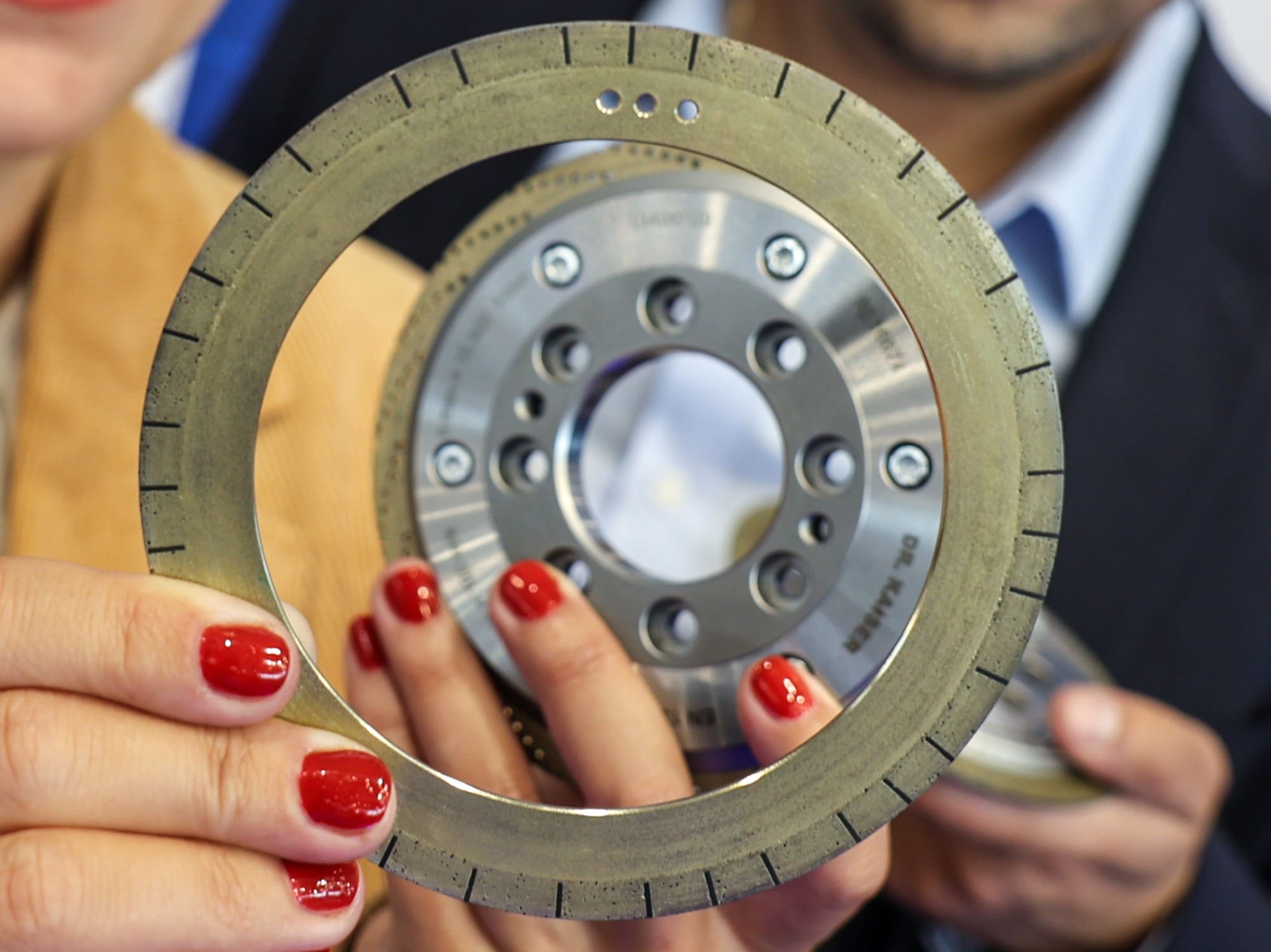
Dr. Kaiser from Celle presented the Eco-Wechselsystem, a modular dressing system in which the backing is reused and only the worn dressing layer is replaced. The dressing unit can thus be divided into a durable base unit and a replaceable functional coating. This reduces material usage compared to purchasing a completely new unit and can lower replacement costs, since users can keep replacement rings on hand and swap them out as needed. According to the manufacturer, the replacement can be performed both at the factory and by the user using a tool set. What is important for the grinding process is that the re-machining should be performed without compromising the required tolerance and concentricity specifications. The system is therefore primarily designed to address resource utilization, tool logistics, and the reusability of precision backing components during the dressing of ultra-hard abrasives.
Grinding Technology: The Balance Between Process Knowledge and System Integration
GrindingHub 2026 made it impressively clear: The future of grinding technology lies not in the isolated improvement of individual components, but in their targeted integration into stable, monitored, and cost-effective process chains. More powerful tools, more flexible chucking and support systems, optimized coolant delivery, process-optimized measurement technology, more autonomous handling solutions, and secure digital infrastructures are increasingly coming together to form a cohesive system. In this interplay, process knowledge, data, and automation are playing an increasingly critical role in determining productivity, quality, and resource efficiency.
AI-powered and data-driven solutions complement this trend by making it easier to assess machine conditions, tool wear, process deviations, and quality characteristics. This lays the foundation for more closely monitored and, in the long run, more autonomous manufacturing processes. Progress in this area lies less in individual technological breakthroughs and more in numerous application-oriented, detailed improvements that make grinding processes more stable, more cost-effective, more transparent, and easier to integrate into end-to-end manufacturing strategies.
Author: Tountzer Tsagkir Dereli, M.Sc., Institute for Machining, Dortmund Technical University, E-mail tountzer.tsagkirdereli@tu-dortmund.de
Our technical report is also available for download: Download technical report (PDF, 375 KB)
back to overview